 |
| Kenya's thriving coral reef is beautifully fragile and endangered |
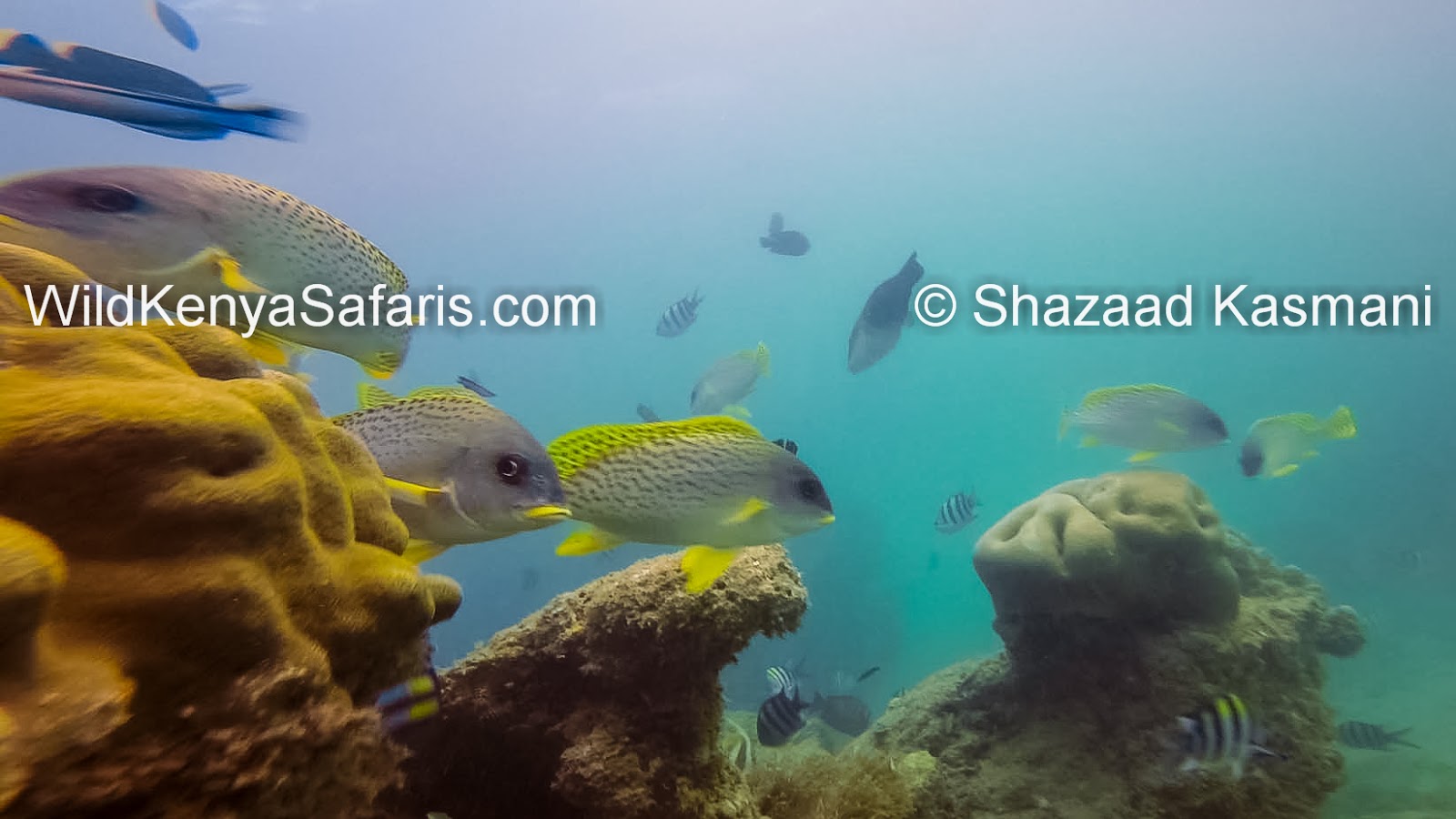 |
| Some Black Spotted Sweetlips on the reef in Kenya |
There is an annual celebration across the world on June 8th where people from all walks of life come together to celebrate the beauty of our blue planet. This day is known as World Ocean Day and every year the theme changes in accordance with the UN specifications for improvement in oceanic conservation. This years Wold Ocean Day 2015 theme is titled "Healthy Oceans - Healthy Planet".
Kenya's section of the Indian ocean is without a doubt one of the most pristine and relatively untouched of Africa's oceanic realms. The diving here is phenomenal and the potential for divers to discover new reefs that have never been dived before adds to every explorers excitement.
The Kenya Wildlife Service has placed certain sections of Kenya's fringing reef under its protection by designating them as marine parks. This naturally means divers and snorkelers can enjoy spending some bottom time in zones that are free of fishing and other forms of ocean harvesting.
The Indian Ocean waters of Kenya have a major social and economic role to play. The ocean helps to connect people, it facilitates major import and export shipping trade, it is the country's number one source of protein in terms of fish consumption, its beaches and marine life generate much needed tourism revenues and most importantly our ocean helps to regulate the country's climate.
Seeing as how important the ocean is to us, Kenya hence needs to preserve this major economic and social asset between 2015 & 2016. Some of the major threats to our waters are pollution from plastics and garbage, illegal over fishing by trawlers and artisan fishing using undersized nets and most recently sand harvesting at the outer reef along the south coast.
Let us continue to protect and preserve our beautiful ocean because as the theme goes... A Healthy Ocean is a Healthy Planet.
Comments
Post a Comment